The FinOps Foundation's 2026 Framework expands the discipline's scope and raises the bar for executive alignment. Here's what changed and why it matters for enterprise technology governance.
FinOps practitioners have been managing new problems like AI token spend, SaaS licensing, and data platform costs, but without a playbook. The technology estate kept expanding while the governance framework stayed focused on cloud. The FinOps Foundation's 2026 Framework update is the answer, expanding not just the scope of FinOps but redefining the function's mandate, its relationship to executive leadership, and the structures required to govern technology investment at enterprise scale.
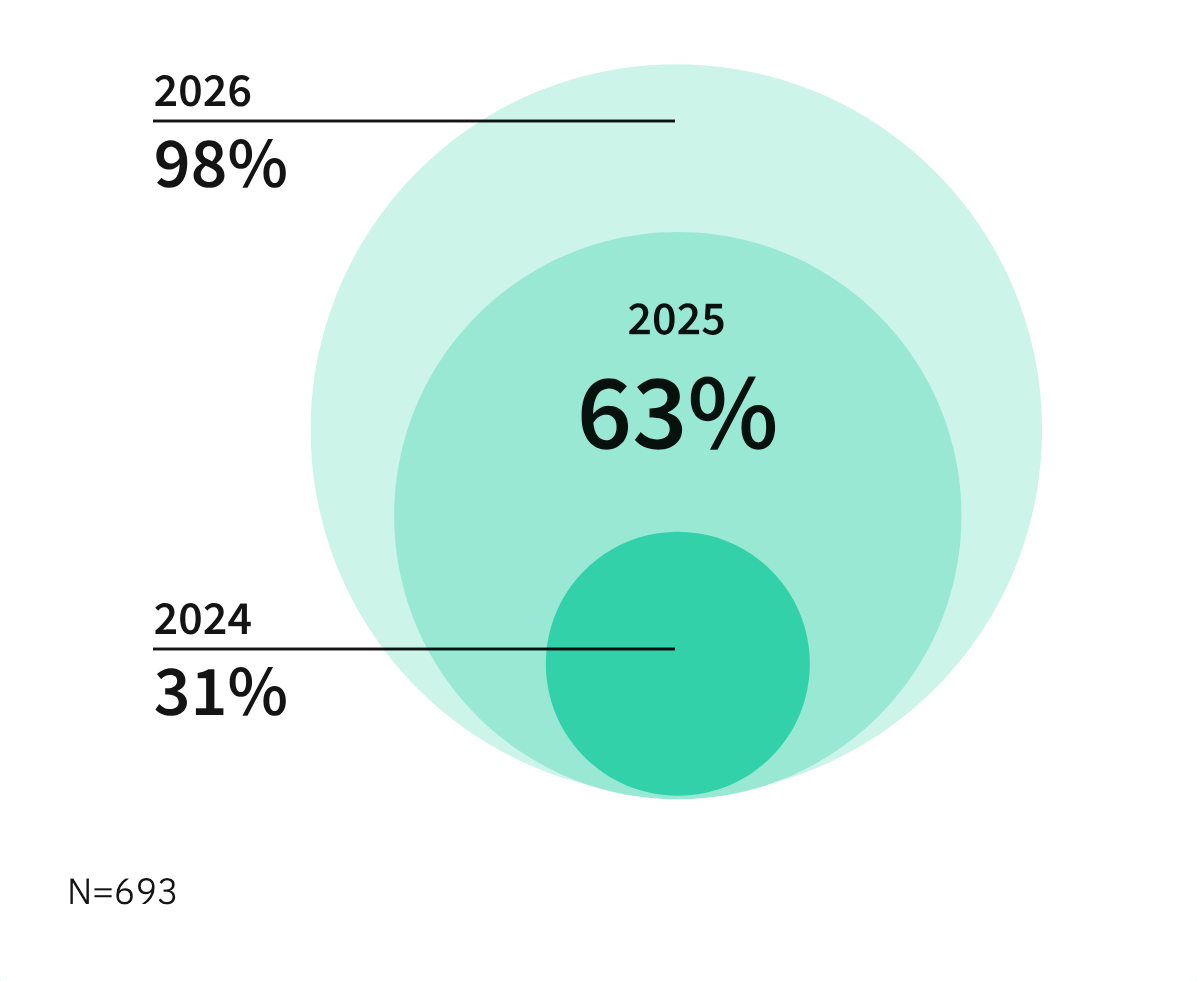
Worldwide spending on AI is forecast to reach $2.52 trillion in 2026, a 44% increase year-over-year, according to Gartner. 98% of FinOps teams now manage AI spend, up from 31% just two years ago. At the same time, SaaS visibility remains a persistent problem: the average enterprise loses $19.8 million annually on unused licenses, with only 54% of SaaS licenses actively used in a given month, according to Zylo's 2026 SaaS Management Index. The technology estate has grown well beyond what a cloud-focused FinOps practice can govern, and the organizations that don't address the issue are accumulating a governance deficit.
The 2026 FinOps Framework provides the necessary structure for practitioners. Four changes stand out as the most operationally significant:
- A deepened approach to Scopes
- A new Executive Strategy Alignment capability
- Updated Technology Categories that span the full enterprise tech estate
- A more substantive treatment of Intersecting Disciplines.
The FinOps Foundation's 2026 Framework formalizes FinOps as a strategic partner to executive leadership and provides a clear blueprint for realizing that charge. Here, we’ve leveraged expert guidance to help practitioners interpret the most critical points from the new Framework.
Unit Economics and Avoiding “Zombie Scopes”
The 2026 Framework's treatment of Scopes is the most practitioner-grade addition in the update. A Scope is a defined segment of spending across technology categories, aligned to a business construct like a product, a cost center, or an environment. What's new is the operational depth around how Scopes are initiated, managed, and closed.
The Framework's position is that Scopes should be initiated by business questions from leadership, not by practitioners deciding to analyze a new spend category. In practice, that rarely happens automatically.
"The conversation has to change from total cost to unit economics," says Rajeev Laungani, Head of Product at Virtasant. "Leadership doesn't inherently care about EC2 [Amazon Elastic Compute Cloud] or compute instance costs; they care about the cost per transaction, cost per customer, or cost per feature. When a FinOps team matures enough to present data in the context of business value — for example, 'Our new AI feature costs $0.05 per prompt, resulting in a 10% margin decrease' — leadership suddenly has the context they need to ask strategic business questions. That is the inflection point where FinOps becomes a proactive business tool rather than a reactive IT function."
The Framework also provides concrete guidance on Scope lifecycle management. On the closing end, most organizations fall short. The result, as Laungani describes it, is "zombie scopes,” projects that are technically complete but still incur passive infrastructure and licensing costs.
"Organizations almost universally struggle more with closing scopes. Enterprises are fantastic at spinning up new initiatives, proof-of-concepts, and digital transformations, but they are notoriously bad at managing the true business outcome."
—Rajeev Laungani, Virtasant Head of Product
A well-managed Scope outcome has three characteristics, according to Laungani:
- Pre-defined success metrics: the criteria for closing the Scope due to success or failure are defined before the first resource is created.
- Automated resource decommissioning, rather than manual IT tickets.
- Active commitment reallocation: the FinOps team reallocates any Reserved Instances or Savings Plans tied to the closing Scope to other areas of the business, so those financial commitments don't go to waste.
The Framework's AI Scope example is worth examining as well. It specifies that an innovation-focused AI Scope should tolerate higher waste, engage data science and product personas, and operate at the fastest cadence with low maturity acceptable. But that’s the opposite of how most FinOps practices are configured. Organizations applying cloud-era efficiency standards to AI innovation work will either underinvest in experimentation or manufacture the appearance of governance without the substance.
How FinOps Can Earn a Place in the Boardroom
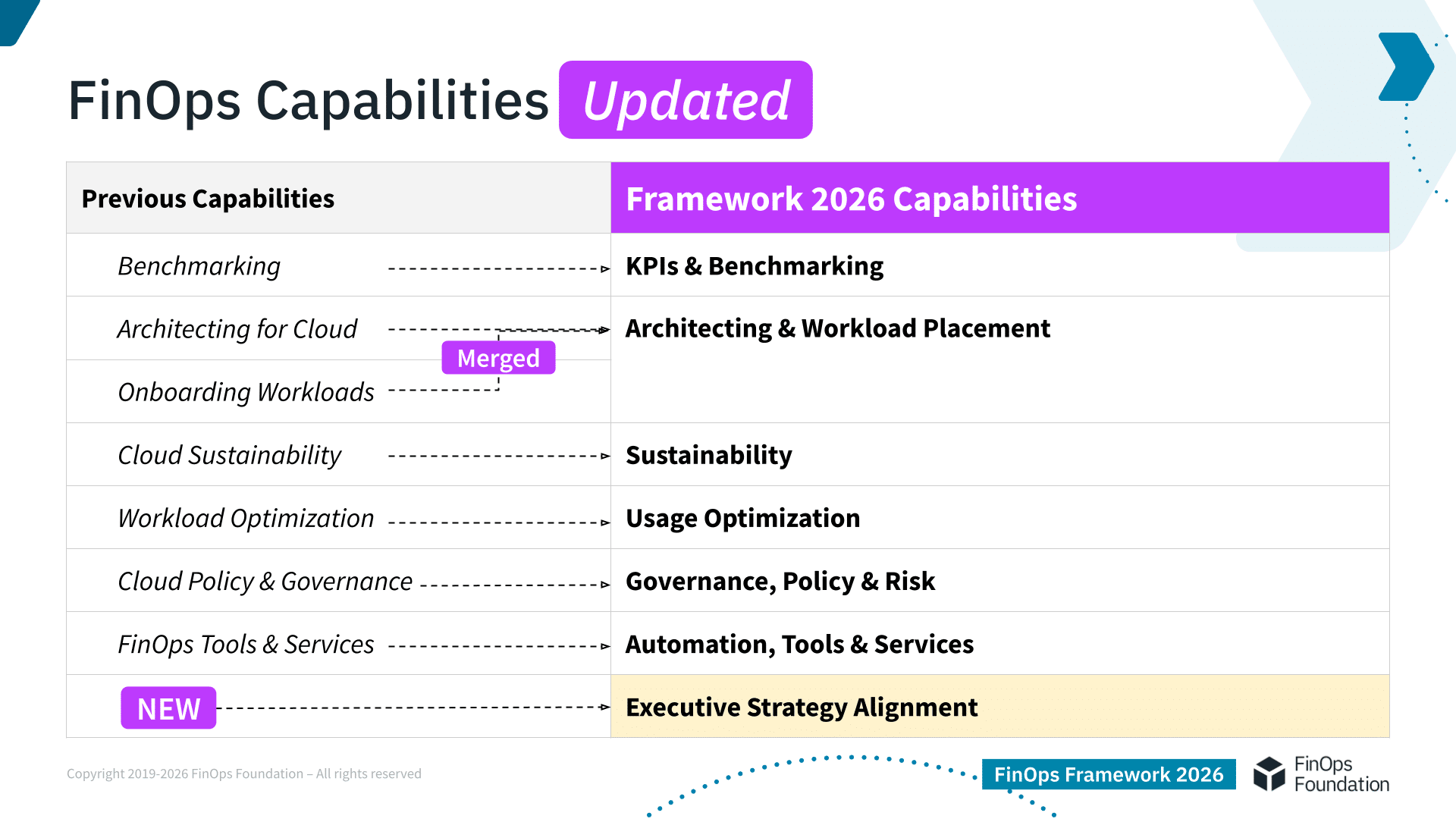
One of the most significant new additions in the 2026 FinOps Framework reflects the expansiveness of the discipline: the Executive Strategy Alignment capability, housed in the Manage the FinOps Practice domain. It is organized around four areas:
- Executive Priority Alignment
- Multi-Year Investment Strategy
- Facilitate Product Prioritization Strategy
- Enable Strategic Decision Support
Collectively, they describe what a FinOps practice looks like when it is operating as a forward-looking investment partner.
But Laungani says most organizations are not there yet. "They have mastered retrospective reporting — they know exactly who spent what last month — and they are getting comfortable with basic historical-trend forecasting," he says. "However, true forward-looking investment decision support remains aspirational for many. And true ROI and outcomes aren't quantified properly across the practice."
Laungani points out a "fundamental disconnect between traditional FP&A cycles and technology cloud consumption." He underscores the difference between large enterprise budgeting cycles (governed by rigid, top-down financial models) and the high variability, decentralized consumption models that cloud budgets require. “To know where your technology and AI capital is truly being invested in the right way, a true integration is required from the cost accountability perspective," he says.
"You don't get in the room by demanding a seat; you get in the room by providing tools that allow an enterprise to understand where inefficiencies lie and how to holistically remedy them."
—Rajeev Laungani, Virtasant Head of Product
The Multi-Year Investment Strategy area of the capability can help cement that true integration. It uses FinOps cost and usage data to support enterprise budgeting, P&L ownership, and long-term vendor commitment governance. Reaching this level requires a specific kind of organizational credibility, challenging FinOps teams to develop deep financial acumen. By demonstrating their ability to reliably predict spend, FinOps teams will naturally get pulled into broader P&L and budgeting conversations.
Integrating FinOps in the Design Phase
The new framework renames “Architecting for Cloud” to “Architecting and Workload Placement,” one of the more instructive changes. The new framework goes a layer deeper to ask not just how to optimize a workload on a given platform, but whether that platform is the right choice at all. The Framework argues that this decision should happen before deployment commitments are made: in the design phase, not the optimization phase.
Up until now, FinOps has mostly validated choices in this regard, rather than making them. Getting FinOps into design phase conversations requires a culture shift. "If architects view FinOps as an audit function that will slow them down, they will avoid it," Laungani says. To get invited to the design phase, Laungani says, FinOps teams must provide immediate value to both engineers and executives. This means providing ways for architects to see the financial impact of their choices pre-deployment: self-service cost calculators, IDE (Integrated Development Environment) plugins, and CI/CD (Continuous Integration and Continuous Deployment/Delivery) cost estimates
The same logic applies to the renaming of Workload Optimization to Usage Optimization. Optimizing resource usage now applies across all Scopes, not just cloud workloads. A FinOps practice still organized around infrastructure efficiency metrics will miss the waste accumulating in AI usage, SaaS underutilization, and data platform overconsumption.
On Converging Disciplines
The new framework makes a pointed argument: ITAM (IT asset management), ITFM (IT financial management), sustainability, and security are converging with FinOps. But organizations that treat these functions as separate lanes are producing fragmented, unreconciled views of technology cost, risk, and value.
When organizations work with, rather than against, this convergence trend, it tends to take a specific organizational form. "It usually takes the form of a centralized Cloud Center of Excellence or a unified Technology Business Management office," Laungani says. "In these organizations, when a team evaluates migrating a workload, they look at a single dashboard that shows the cloud run cost [FinOps], the software licensing impact [ITAM], and the carbon footprint reduction [Sustainability]."
Where it doesn't work, conflicting KPIs are a result. "The FinOps team might push to shut down idle legacy servers to save money, while ITAM is trying to maintain those same servers because they are tied to a multi-year enterprise license agreement," Laungani explains. Procurement handles ITAM as a compliance exercise. Facilities handles sustainability for ESG (environmental, social, and governance) reporting. Engineering handles FinOps. The result is that each function optimizes for its own metric while the organization's total technology value picture stays fragmented.
The Framework's updated Intersecting Disciplines capability provides a structure for coordination: shared data, aligned governance, a common approach to TCO (total cost of ownership), and ROI. For organizations where these functions currently report to different executives with no shared data layer, this section of the Framework is a blueprint for changing that structure.
Three Questions for FinOps Teams
The 2026 FinOps Framework raises the bar for FinOps as a discipline.
For most enterprises, the gap between the current state and the Framework's vision is a positioning problem. FinOps teams that present spend data in infrastructure terms will stay in infrastructure conversations. Teams that present spend data in business value terms (cost per transaction, cost per customer, cost per feature) will find themselves in strategic ones.
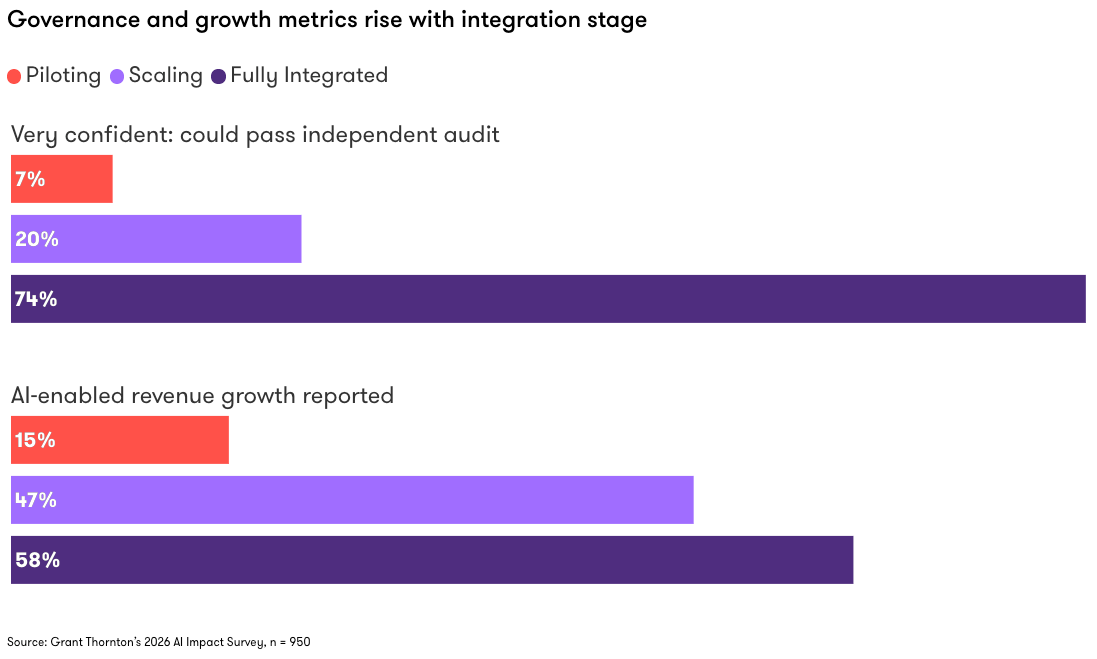
Grant Thornton's 2026 AI Impact Survey found that organizations with fully integrated AI governance are nearly four times more likely to report revenue growth than those still piloting, 58% versus 15%. The difference, the report concludes, is accountability. The 2026 FinOps Framework is a blueprint for building exactly that.
Three questions worth bringing to your next leadership conversation:
- Which technology categories are currently outside your FinOps scope? AI tokens, SaaS licenses, and data platform costs are the most common blind spots. If there is no formal governance model for those categories, further inquiry is warranted.
- Are your FinOps insights shaping investment decisions before commitments are made? Or only after costs are visible? The Framework's Executive Strategy Alignment capability describes what the former looks like in practice. But most organizations are still leveraging FinOps insights reactively.
- Do your ITAM, ITFM, and sustainability teams share a data layer with FinOps? Conflicting KPIs across these functions are a reliable sign that the convergence the Framework describes is being stalled. A single dashboard showing run cost, licensing impact, and carbon footprint is the new benchmark.
The organizations that use this Framework update as a prompt for those conversations will be better positioned when boards start demanding defensible answers on technology ROI. The ones that treat it as a FinOps team concern will keep producing retrospective reports that leadership already knows how to ignore.
What is the FinOps Framework 2026?
The FinOps Framework 2026 is the FinOps Foundation's updated operational framework for managing technology spend across enterprise organizations. The 2026 update expands the discipline's scope beyond cloud to include AI, SaaS, data platforms, and data center spend, and introduces new guidance on Scopes, executive alignment, and intersecting disciplines.
What is new in the FinOps Foundation's 2026 Framework update?
The most significant additions are a deepened Scopes model with lifecycle guidance, a new Executive Strategy Alignment capability covering multi-year investment strategy and strategic decision support, dedicated Technology Category pages for AI, SaaS, Data Center, and Data Cloud Platforms, and an updated Intersecting Disciplines capability addressing convergence with ITAM, ITFM, sustainability, and security.
How does the FinOps Framework 2026 address AI spend governance?
The 2026 Framework introduces a dedicated AI Technology Category with structured guidance on capabilities, personas, KPIs, and FOCUS alignment specific to AI spend. It also provides a worked AI Scope example that defines appropriate maturity expectations, waste tolerance, and cadence for innovation-focused AI work, which differs significantly from cloud cost optimization Scopes.
What is a FinOps Scope, and how has it changed in 2026?
A FinOps Scope is a defined segment of technology spending aligned to a business construct such as a product, cost center, or environment. The 2026 Framework deepens the Scope model with guidance on initiation (driven by leadership business questions), lifecycle management, and Scope exit, including pre-defined success metrics, automated decommissioning, and commitment reallocation.
What skills does a FinOps team need to contribute to executive strategy?
To operate at the level the 2026 Framework's Executive Strategy Alignment capability describes, a FinOps team needs deep financial acumen beyond cloud infrastructure knowledge, a proven track record of accurate spend allocation, and the ability to forecast spend based on business drivers. Once finance trusts the FinOps team's predictions, it will pull them into P&L and budgeting conversations naturally.


.svg)