
Why the Cost of AI Keeps Surprising Even Experienced Executives
The true cost of AI goes far beyond models. Explore how data talent and governance shape artificial intelligence cost estimation and why CFOs often underestimate AI budgets.
AI spending often escalates beyond the model. Nearly 95% of AI projects fail due to poor data quality and weak system integration, leading to unexpected costs early on.
AI-led cost savings break down without AI-literate teams. By 2027, 50% of Chief Data and Analytics Officers are expected to fund AI literacy programs to avoid rework and risk.
Weak AI governance carries real financial exposure. With 75% of companies struggling to scale AI safely, governance determines whether AI delivers durable value or becomes a recurring financial risk.
Susan Li, Meta’s CFO, saw pressure building long before the market reacted. Meta was accelerating AI investments at a pace few enterprises had attempted. Data centers were expanding, superintelligence labs were taking shape, and competition for scarce AI talent was intensifying.
Each decision made strategic sense, but costs were accumulating faster than returns could be measured, complicating the estimation of artificial intelligence costs. By the third quarter, that pressure had become visible. Employee compensation rose sharply as Meta hired highly specialized AI and technical talent. Infrastructure spending increased with each new server, chip, and network expansion. Revenue continued to grow, but margins tightened.
The financial reality and cost of AI adoption became harder to ignore. Large investments tied to the cost of implementing artificial intelligence appeared on the balance sheet immediately. On the other hand, the benefits of smarter models and future revenue remained uncertain and difficult to quantify.
“Employee compensation costs will be the second largest contributor to growth as we recognize a full year of compensation for employees hired throughout 2025, particularly AI talent, and add technical talent in priority areas.”
- Susan Li, CFO, Meta.
Meta reported $51.2 billion in quarterly revenue, up 26% year over year. At the same time, net profit fell sharply, driven in part by the rising cost of the AI-related one-time tax charge. Investors responded quickly, sending the stock down by more than 10%.
Meta’s situation reflects a broader pattern around the cost of AI that CFOs across industries are now encountering. As AI adoption scales, the cost of implementing AI has become a key concern. In fact, 54% of infrastructure and operations leaders say cost optimization is their top priority when implementing AI, showing how quickly AI spending can outpace planning.
At the same time, widespread AI deployment hasn’t delivered immediate financial returns. Nearly 80% of companies have deployed generative AI in at least one business function, yet roughly the same percentage report no material impact on earnings so far. For CFOs, this growing gap between adoption and measurable return is where artificial intelligence cost estimation becomes most uncertain.
This raises a critical question that CFOs must consider before approving the next phase of AI investment. How much does AI usually cost, and why does the cost of AI so often exceed what organizations initially expect?
Susan Li’s experience reflects a challenge many enterprises now face. Beyond the initial technology, the cost of implementing AI includes data preparation, system integration, talent, and governance. The cost of implementing artificial intelligence adds up early, often affecting budgets long before clear value is seen.
In this article, we’ll explore the hidden costs of enterprise AI and what CFOs need to consider before approving AI budgets.
Why the Cost of AI Matters for CFOs in Enterprise Organizations
Enterprise AI promises faster decisions, greater automation, and smarter insights. In reality, the cost of AI often exceeds teams' expectations.
Building AI models is just the starting point. Infrastructure upgrades, data preparation, and ongoing operations quickly add to the total spend. For CFOs, this makes it harder to evaluate the upfront cost of implementing AI and to measure the return on AI investments.
Here are three key cost factors CFOs should consider before investing in and managing the cost of implementing AI:
1. Budgeting Beyond the AI Model: For CFOs, accurate artificial intelligence cost estimation is difficult because many expenses appear only after systems scale. For instance, poor data quality, weak system integration, and lack of real-time readiness can turn AI projects into costly failures. These hidden costs are often overlooked, even though data issues remain one of the biggest barriers to successful AI adoption. In fact, up to 95% of AI projects fail due to inaccurate, biased, or outdated data, underscoring the critical role of proper data preparation and system integration in ensuring AI works as intended.
2. Having AI-Literate Talent: Success with enterprise AI depends as much on people as on technology. Without AI-literate managers and strong human oversight, automation gains can erode quickly, while errors and recovery costs rise. AI literacy refers to understanding how AI systems behave, where risks emerge, and how to apply them responsibly in real business settings. Leading organizations build this literacy through hands-on mechanisms, not passive training. AI hackathons turn employees into active practitioners, while red teams pressure-test AI assumptions and outputs before systems scale. By 2027, 50% of Chief Data and Analytics Officers are expected to secure funding for data and AI literacy programs, indicating that organizations increasingly see AI literacy as essential for sustainable adoption.
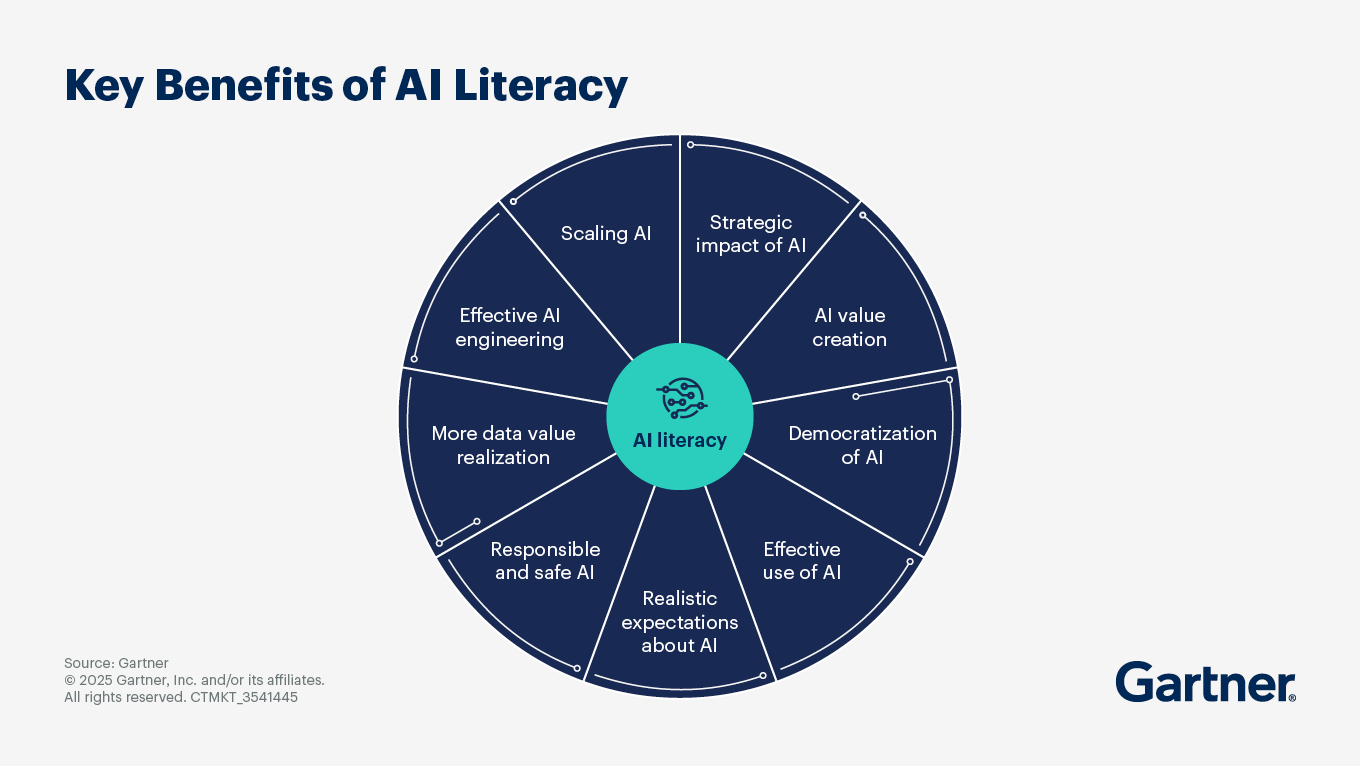
3. Strong AI Governance: Even small AI deployments can create legal, financial, and reputational risks if they lack clear validation, oversight, and accountability. The problem often lies with leadership’s limited understanding of how AI should be governed, scaled, and monitored. Nearly 40% of companies fail at AI implementation because executives misunderstand AI’s potential, and 75% admit they do not fully know how to scale it across their organizations. Without robust governance frameworks, unclear ownership and decision-making can quickly turn AI initiatives into costly liabilities.
Next, we’ll walk through three case studies that show how gaps in budgeting beyond the model, AI-literate talent, and governance can quickly turn AI investments into unexpected financial risk for CFOs.
How Zillow’s AI Home Flipping Exposes Costs Beyond the AI Model
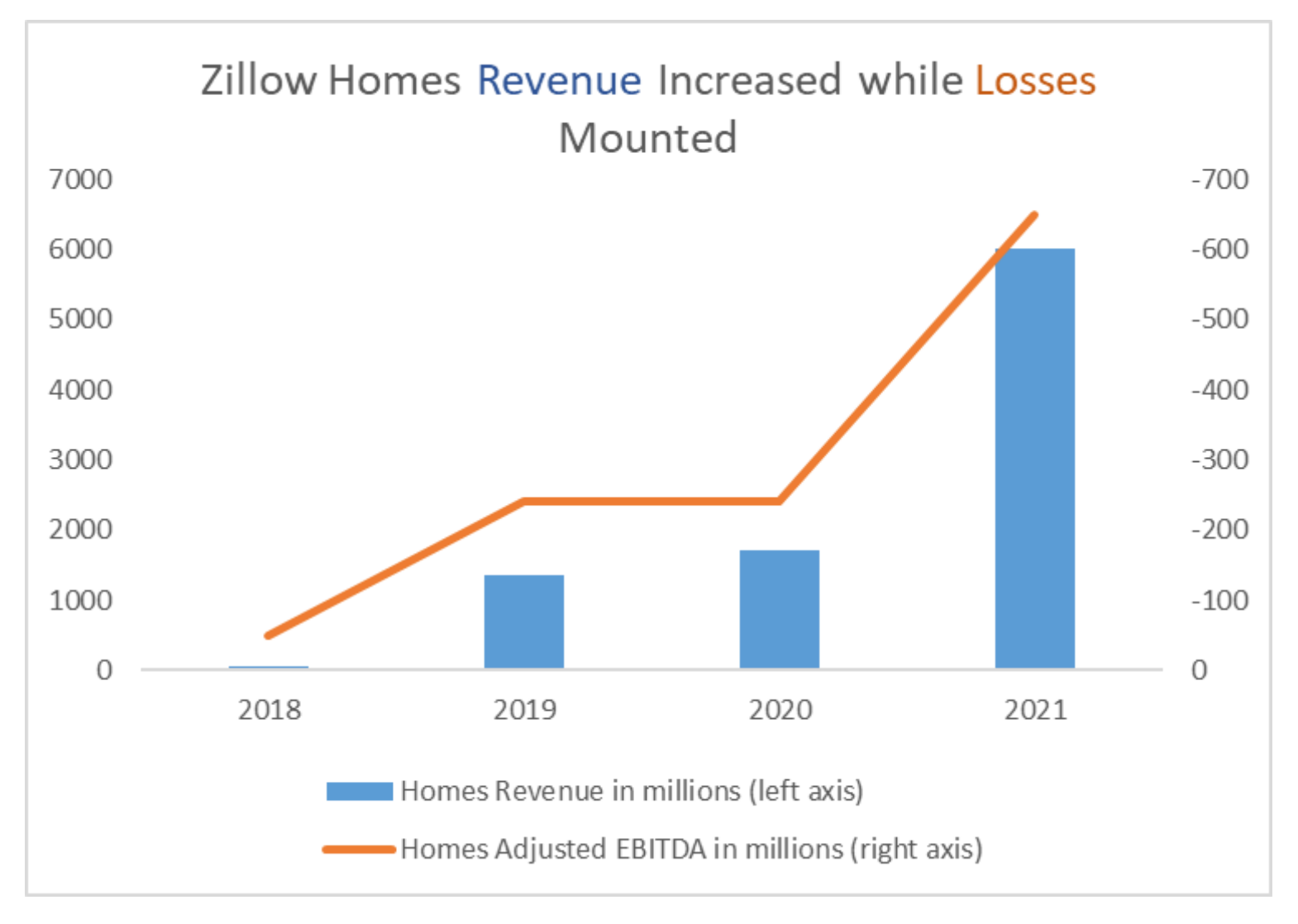
When Zillow, a leading U.S. real estate marketplace, decided to scale its home-flipping business, the strategy seemed straightforward. AI would power rapid home-buying decisions at scale. Machine-learning models would forecast prices, generate instant cash offers through Zestimate, and automate purchases with limited human oversight. Between 2018 and 2021, Zillow invested hundreds of millions of dollars, purchasing tens of thousands of homes and managing nearly 27,000 properties at once.
At first glance, the setup looked ideal for AI success. By 2021, Zillow had logged more than 10.2 billion visits and maintained data on roughly 135 million U.S. homes. More data promised better predictions, faster execution, and operational scale. However, a 2024 research case study found that Zillow Offers failed not simply because of model inaccuracy, but because of the cost of budgeting narrowly for the AI model while underestimating operational integration and decision readiness.
After analyzing Zillow’s AI and ML pricing system and its operational rollout, the authors conclude that “AI alone is not enough to create value; it needs integration with human expertise.” They argue that Zillow failed to develop this competency, instead scaling volume and market share rapidly without respecting the role of human experts as guardrails for its evolving price prediction algorithms. As the business scaled, this gap created a mismatch between predicted prices and real-world purchase decisions. Zillow’s focus on hypergrowth over profitability amplified these gaps, turning small forecasting errors into large balance-sheet exposure.
Zillow’s pricing relied on the Zestimate, which drew from tax records, homeowner submissions, property photos, and nearby sales. While accuracy was strong for listed homes, performance dropped for off-market properties and struggled to keep pace with rapid supply-demand shifts during the pandemic. Incomplete data, delayed signals, and real-world factors such as neighborhood demand and hidden property defects limited reliability as scale increased.

As Zillow expanded aggressively, gaps in data quality and system integration became impossible to ignore. Pricing failed to reflect local market shifts in real time, inventory accumulated faster than it could be sold, and operational friction grew. By the third quarter of 2021, Zillow recorded a $304 million inventory write-down and shut down Zillow Offers, with total losses exceeding $500 million and nearly 2,000 layoffs.
“The challenge we faced in Zillow Offers was the ability to accurately forecast the future price of inventory three to six months out, in a market where there were larger and more rapid changes in home values than ever before.”
— Viet Shelton, Zillow spokesperson
For CFOs and business leaders, Zillow’s experience underscores the risk of budgeting beyond the AI model too late. When spending is concentrated on model development, costs tied to data quality, system integration, and real-time readiness often emerge only as systems scale. These overlooked expenses can quickly erode returns.
The true cost of AI extends well beyond the model itself, requiring sustained investment to support reliable, data-driven decision-making.
Principal Financial Reveals the Impact of Workforce AI Knowledge
Principal Financial, a global financial services leader, made AI literacy a top priority under CEO Deanna Strable, aiming to embed AI knowledge across all levels of the company. The company faced a challenge: many employees and executives were unfamiliar with AI tools and hesitant to use them, limiting the potential benefits for productivity, decision-making, and customer engagement. This highlights an often-overlooked factor in artificial intelligence cost estimation, showing the importance of the human element in adoption.
To address this, Strable began by mandating a 4-hour in-person AI training session for the executive leadership team. This ensured that leaders could guide adoption and integrate AI into workflows. Following the executive training, Principal Financial launched its first AI literacy program for all 20,000 employees. The program includes four courses, each under ten hours, covering core AI concepts, prompt engineering, and the importance of using accurate data for large language models. AI training is now part of onboarding, with plans for specialized tracks in the future.
The company boosted AI adoption by introducing several tools. These tools included a generative AI assistant for tasks like summarization and email drafts, an enterprise version of OpenAI’s ChatGPT, and the Principal AI Generative Experience, a conversational AI platform built on Amazon QnABot, Amazon Q Business, and Amazon Bedrock. To help employees make the most of these tools, 700 AI ambassadors across departments provided guidance and support.
“The first and foremost challenge is educating our workforce around AI so we can get the best out of it. You don’t just need AI builders, you need AI practitioners.”
— Rajesh Arora, Chief Data and Analytics Officer
About 82% of employees completed at least one AI course, and 39% finished all four. Active use of AI tools grew dramatically, from 800 early users to more than 8,000 employees applying them in their daily work. This shows that business leaders and financial officers can drive successful AI adoption not just through technology. Building company-wide AI literacy equips employees to work more productively and deliver measurable business value while accounting for the true cost of implementing AI.
How Deloitte’s Government Review Exposed Failures in AI Governance
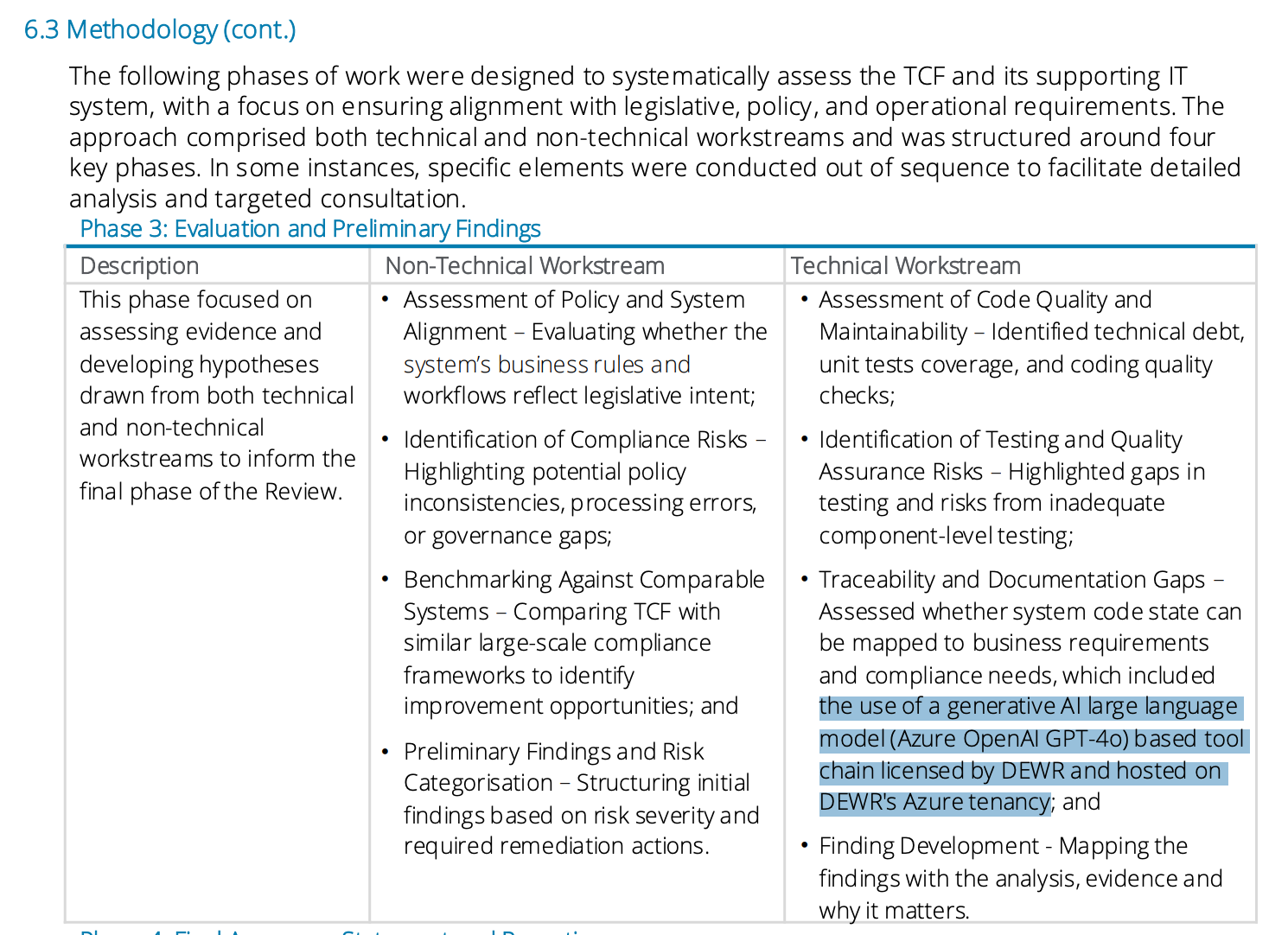
To speed up delivery and reduce consulting effort, Deloitte’s Australian practice turned to generative AI while producing a major government review for the Department of Employment and Workplace Relations. The 237-page report, created under a contract valued at approximately A$440,000 (US$290,000), used Azure OpenAI’s GPT-4 to assist with drafting, positioning AI as a productivity accelerator in high-stakes public-sector work.
The risks of this approach became apparent after publication. A researcher reviewing the report flagged multiple hallucinations, including references to nonexistent academic papers and a fabricated quote attributed to a federal court judgment.
“I instantaneously knew it was either hallucinated by AI or the world’s best-kept secret because I’d never heard of the book, and it sounded preposterous.”
- Chris Rudge, Sydney University researcher
Deloitte later confirmed that some citations and footnotes were incorrect. The report was corrected and reissued, replacing the earlier version published, and Deloitte issued a partial refund to the government client.
It is clear that the failure was caused by weak governance around its use. AI-generated content passed internal review without sufficient verification, exposing gaps in validation processes, accountability, and human oversight. As scrutiny increased, the incident drew public and regulatory attention, amplifying Deloitte's reputational and contractual risks.
Around the same time, Deloitte faced similar issues in Canada. A government-commissioned healthcare report, costing nearly $1.6 million, contained false citations and misattributed academic research. The report included fictional papers and authors, revealing systemic gaps in how the cost of implementing AI in healthcare is often underestimated. It also highlighted weaknesses in the review of AI-assisted work on sensitive government projects.
Deloitte’s experience in Australia and Canada highlights a clear lesson for executives and CFOs: deploying AI in regulated, high-stakes environments requires more than technology. Budgets must account for the full cost of implementing AI, including governance and verification. Without these safeguards, short-term efficiency gains can quickly be wiped out by errors, rework, refunds, and reputational damage.
When AI Ambition Meets Financial Reality
Meta’s experience shows that the cost of implementing AI goes far beyond initial deployment. Costs were not limited to building models or deploying tools. Many expenses appeared early in the process, while meaningful financial returns took much longer to emerge. This gap highlights the difference between ambitious AI plans and real-world budget constraints in artificial intelligence cost estimation.
Before investing in AI and managing the cost of implementing AI, CFOs should plan for more than the technology itself. Budgets need to cover data readiness, AI-literate teams, system integration, and strong governance. Considering these factors upfront helps ensure AI delivers real, sustainable value instead of unexpected costs or risks.
.avif)


.svg)


_0000_Layer-2.png)

