
Inside How Foxconn, GXO, and Schaeffler Moved Physical AI Into Production
The barrier to physical AI is deployment, not the technology itself. Foxconn, GXO, and Schaeffler each solved one of three problems that strand many programs at the pilot stage.
Physical AI could near $496 billion by 2030, yet many programs never leave the pilot.
Simulation now trains robots to 99% real-world accuracy before they touch the floor.
Three problems strand most physical AI programs: data, reliability, retrofit.
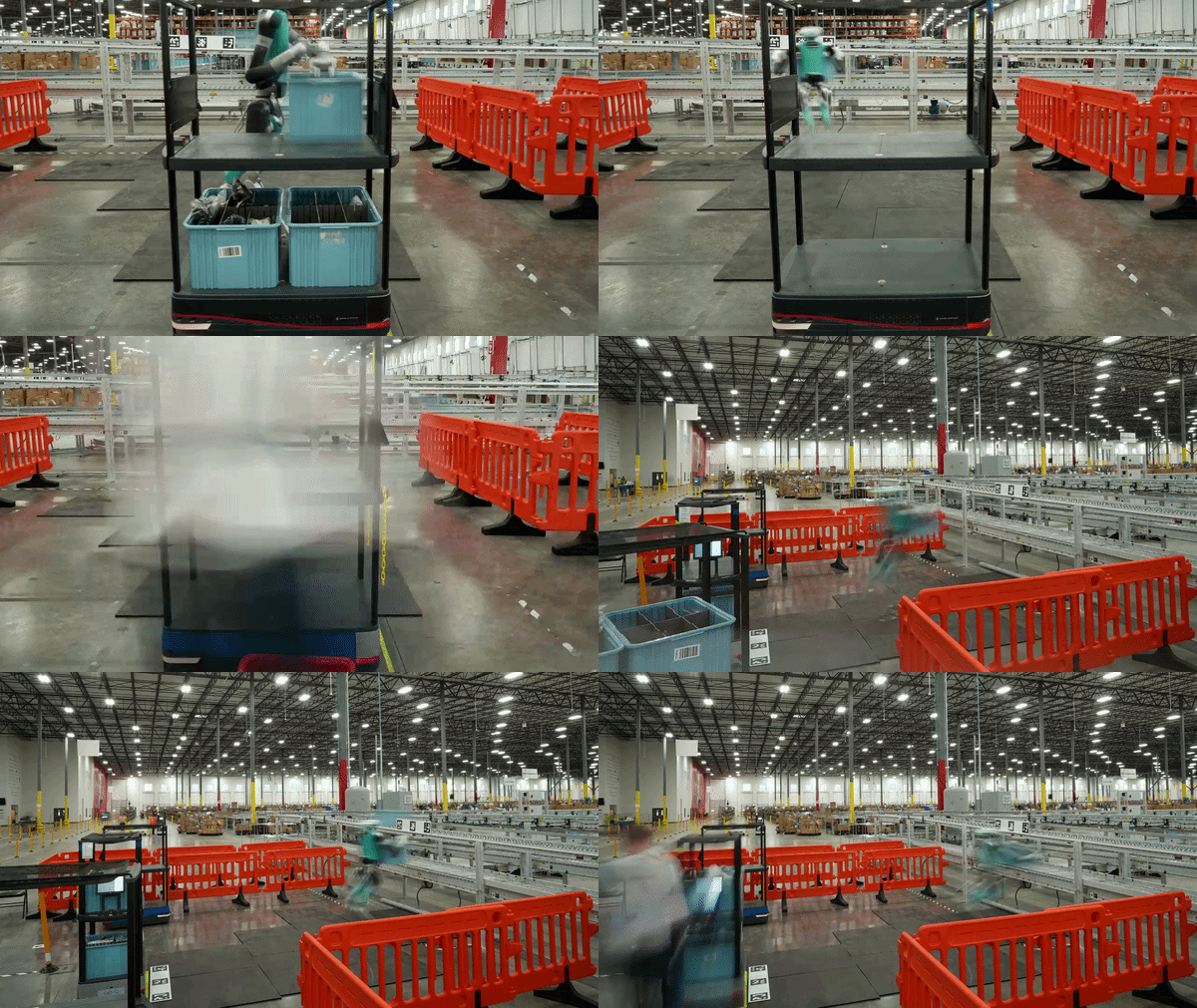
On a factory floor in Cheraw, South Carolina, a two-legged robot named Digit bends down, lifts a basket of bearing components weighing about as much as a loaded carry-on bag, and carries it across a production plant.
Impressively, this futuristic image is juxtaposed with the fact that the plant was built decades ago. Digit has only been an employee since early 2025. It’s just a machine doing dull, repetitive work in a building that was never designed for it.
For years, humanoid robots lived in demo videos and research labs, doing backflips for the camera. Robots have always been impressive; the hard question was whether one could show up to the same job every day and earn its keep. At Schaeffler, the auto-parts maker running the Cheraw plant, the answer is clear. So why does physical AI stall for so many other organizations?
Why Do Physical AI Projects Stall?
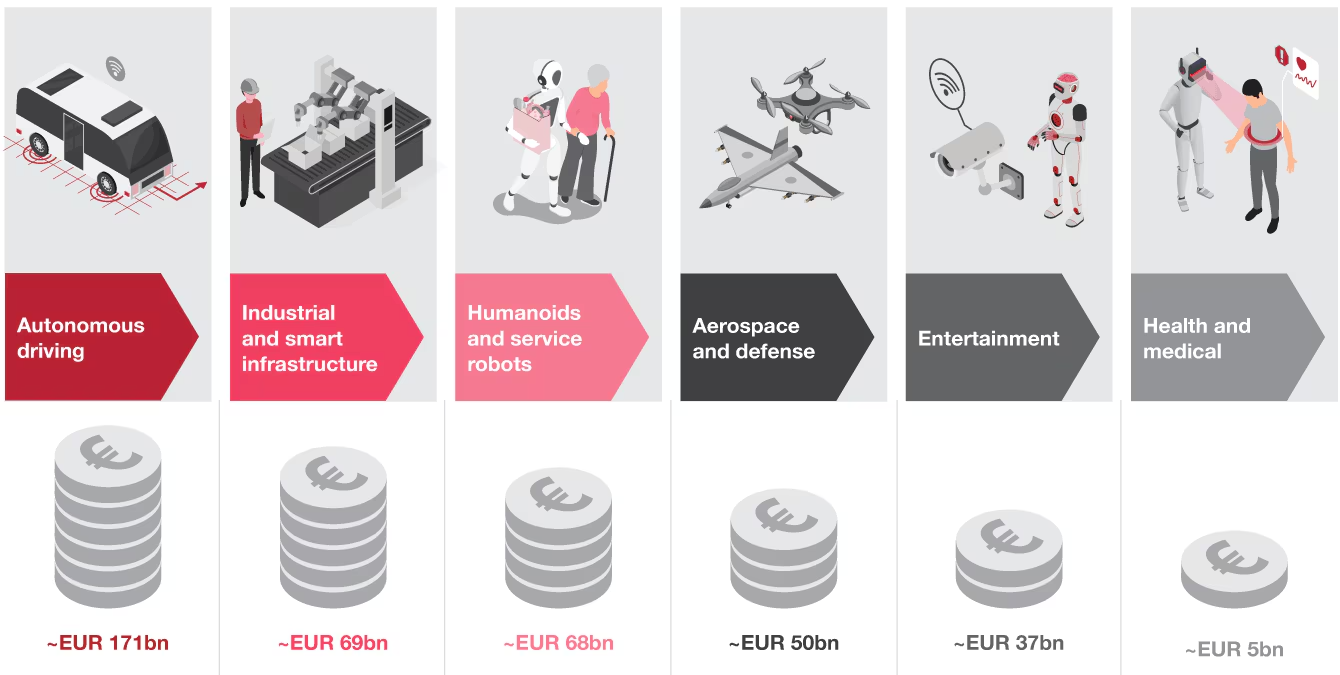
Physical AI refers to artificial intelligence that acts in the real world through robots, autonomous machines, and industrial systems, rather than living inside a chat window. It is a large and near-term market, not a someday idea. PwC's strategy unit projects the physical AI market will approach $496 billion by 2030 and urges executives to make positioning decisions within the next 12 to 24 months. It projects autonomous driving as the largest market opportunity, followed closely by industrial and smart infrastructure and humanoids and service robots. Goldman Sachs frames the opportunity in even blunter terms, identifying a major untapped opportunity in the roughly 99% of the economy that software has barely touched: factories, warehouses, power plants, and job sites.
Yet many companies chasing these opportunities never get past the pilot. McKinsey describes the challenge as a chasm between concept and commercial reality, warning that companies which clear only some of the thresholds to scaled deployment "will remain stuck in pilot purgatory." Some may say physical AI is a waiting game, that leaders should hold off until the machines get good enough. The evidence says something different. The technology is deployable right now; it is the mechanics of that deployment that tend to materialize as three specific roadblocks:
- Training data: a robot cannot learn its task from the internet the way a chatbot does, and the real-world data it needs does not exist until the machine is already on the floor. This is why simulation generates that data instead, reaching 99% correlation with real-world behavior.
- Reliability: a robot that works in a demo has proven nothing, because a warehouse runs thousands of cycles a day, and only a machine that has proven itself thousands of times in a live commercial operation can be counted as a tool rather than a novelty.
- Retrofitting: most physical AI has to fit inside plants built decades ago for human workers. Retrofitting an autonomous system into that space without redesigning the facility is a challenge, which is why the largest disclosed humanoid rollout to date is being staged plant by plant rather than simultaneously.
Foxconn, GXO Logistics, and Schaeffler are three organizations moving ahead not because they bought better hardware, but because each solved one of these problems.
Solving the Training Data Problem with 99% Correlation
A large language model can learn from the open internet, which holds a near-endless supply of text. A robot cannot. It needs to learn the physics of its exact task, the friction of a specific part, the way light falls on a particular assembly line: that data does not exist until the robot is already on the floor. So programs stall in a loop. The robot cannot deploy until it is trained, and it cannot train until it deploys.
Foxconn, the world's largest electronics manufacturer, broke the loop by training its robots in a simulation before they ever touched the line. Working with ABB Robotics and NVIDIA on a platform called RobotStudio HyperReality, Foxconn builds a physically accurate digital twin of a robot workstation, then generates synthetic data inside it to teach the machine its job. Delicate metal parts and frequent product changes make Foxconn's assembly work especially hard to automate, which is exactly why the approach is crucial.
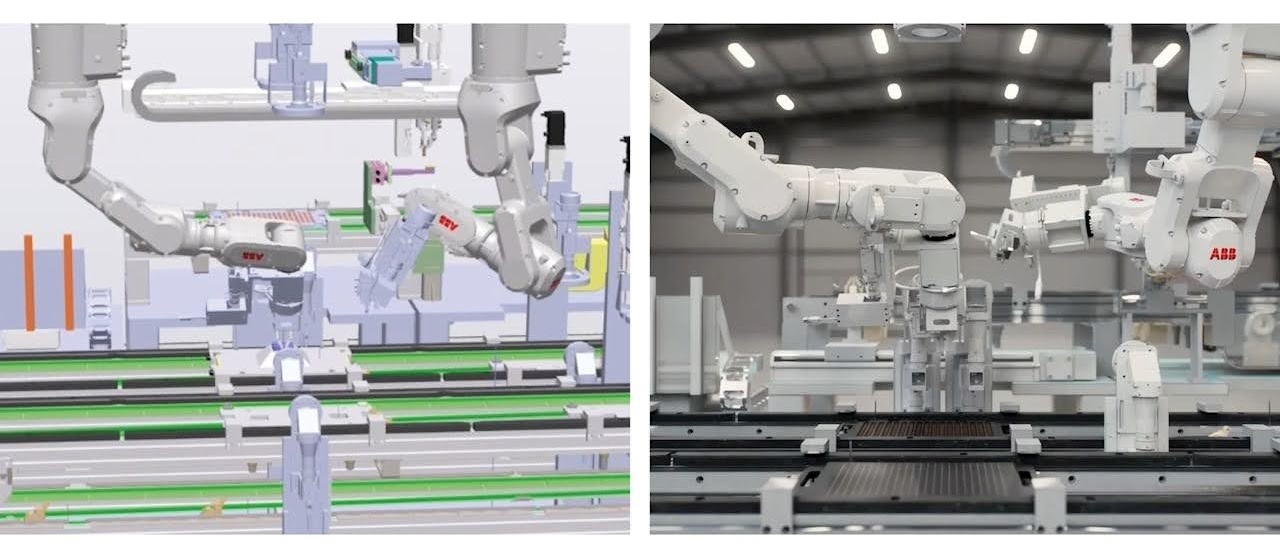
The platform reaches 99% correlation between how a robot behaves in simulation and how it behaves in the real world, and ABB's accuracy technology cuts positioning error from 8 to 15 millimeters to about half a millimeter. ABB reports the method reduces deployment costs by up to 40% and cuts setup and commissioning time by up to 80%.
"Combining RobotStudio with the physically accurate simulation power of NVIDIA Omniverse libraries, we have closed technology's long-standing 'sim-to-real' gap, a huge milestone to deploying physical AI with industrial-grade precision, for real-world customer applications."
—Marc Segura, President, ABB Robotics
The lesson for an operations leader is that the training data problem has a solution that doesn't require shutting down a production line to gather it.
How GXO Logistics Built Trust in Physical AI
Real trust is often earned the hard way, and a robot that performs well in a demonstration has proven almost nothing. A warehouse runs thousands of cycles a day under changing conditions: different weights, shifting light, human workers moving through the same space. A machine that works once and fails on the two-hundredth try is a liability, not a tool. Reliability at scale quickly becomes its own issue, independent of whether the robot can do the task at all.
GXO Logistics, the largest pure-play contract logistics provider in the world, took this problem head-on. Rather than buy robots outright, GXO worked with Agility Robotics under a Robots-as-a-Service model, letting both companies keep expanding as the machines prove themselves. In November 2025, Agility's Digit humanoid passed 100,000 totes moved in live commercial operation at GXO's facility in Flowery Branch, Georgia. That number proves the robot can do a repetitive, labor-intensive job every day in a real fulfillment workflow, picking totes from mobile robots and loading them onto conveyors.
"There will be many firsts in the humanoid robot market in the years to come, but I'm extremely proud of the fact that Agility is the first with actual humanoid robots deployed at a customer site, generating revenue, and solving real-world business problems."
—Peggy Johnson, CEO, Agility Robotics
There is an honest caveat here: independent trackers estimate Agility's total installed base at somewhere between 40 and 150 units across all customers, not the thousands that industry messaging sometimes implies. The mass-scale future is not here yet. For a leader evaluating this space, it’s important to know that the reliability problem is being solved, one verified milestone at a time: it’s something in progress.
The Infrastructure Physical AI Needs: How Schaeffler Did It
Most physical AI has to work inside plants that are decades old, designed for human bodies and legacy machines. Retrofitting an autonomous system into that environment, without redesigning the whole facility and while meeting existing safety and IT requirements, can be a bottleneck.
Schaeffler, the German motion-technology and auto-parts maker from the opening of this piece, has treated integration as the core task from the start. Its Digit robots have run daily shifts at the Cheraw plant since early 2025, fitting into existing production rather than demanding a new one. In May 2026, Schaeffler went further, signing a binding phased agreement with UK robotics firm Humanoid to deploy a four-digit number of wheeled humanoid robots across its global operations by 2032. The rollout starts small and deliberate: an initial phase from December 2026 to June 2027 at two German sites, beginning with box-handling in live production at Herzogenaurach and a staged validation period at Schweinfurt.
The design choices reveal the strategy. Schaeffler and Humanoid chose wheeled robots, not two-legged ones, for a practical reason. As one Schaeffler project manager put it, industrial floors are flat, so the robots do not need legs. The whole approach is built around the plant as it already exists.
"By supporting the phased deployment of humanoid systems in real manufacturing environments and serving as a preferred supplier of actuators, we are contributing to the industrial scaling of this technology while further strengthening our role in future-oriented motion solutions."
—Dr. Jochen Schroeder, Chief Operating Officer, Schaeffler AG
Schaeffler's ambition to place robots across its network of 100 plants is a goal for the end of the decade, not a current footprint. But the phased, integration-first method is the opposite of the all-or-nothing pilots that fail. It is governance built into the deployment: prove it, validate stable operation, then expand.
What the Three Have in Common
Look at the three companies together, and the pattern is clear. Foxconn leans on simulation, GXO on a service model and relentless real-world testing, Schaeffler on phased integration. What they share is a discipline. Each identified the specific threat to its deployment and solved for that, rather than waiting for the machines to become flawless.
That is the reframe for anyone under pressure to show a return on physical AI. The question facing operations leaders is which of the three potential blocking points stands between a given operation and production.
Before the next budget meeting, name your wall. Is it the data you cannot collect, the reliability you have not proven, or the plant you cannot retrofit? The companies that answer that question are the ones already on the floor.
.avif)
Frequent Asked Questions
Is physical AI ready for enterprise deployment?
Physical AI is deployable now, though in its early stages of scaling. Agility's Digit passed 100,000 totes in live operation at GXO, and Schaeffler runs robots on daily factory shifts. But installed bases are still small, and large rollouts are staged over years, so the current picture is proven capability at limited scale.
How is physical AI trained without real-world data?
Physical AI is trained in simulation before it reaches the floor. Companies build a physically accurate digital twin of a workstation and generate synthetic data inside it. ABB and NVIDIA's RobotStudio HyperReality reaches 99% correlation between simulated and real-world behavior, letting robots learn tasks without shutting down a production line to collect data.
Why do physical AI projects fail to reach production?
Physical AI projects usually stall on deployment mechanics, not the robot itself. Three problems trap most programs: training data that does not exist until the robot is deployed, reliability that must be proven across thousands of real cycles, and the difficulty of retrofitting autonomous systems into plants built decades ago for humans.
What are examples of physical AI?
Physical AI examples include Agility Robotics' Digit humanoid moving totes in GXO warehouses, Foxconn's assembly robots trained in simulation, and Schaeffler's wheeled humanoids handling boxes in factories. Broader uses span autonomous vehicles, warehouse fleets, quadruped robots inspecting hazardous sites, and AI-vision systems guiding manufacturing lines across logistics, energy, and industrial operations.
What is physical AI?
Physical AI is artificial intelligence that senses, reasons, and acts in the real world through robots, autonomous vehicles, and industrial machines, rather than living inside software. A chatbot answers a question; a physical AI system moves, grasps, and navigates. It combines AI models with sensors, compute, and mechanical hardware to take physical action.


.svg)


_0000_Layer-2.png)

