
What L'Oréal, Starbucks and Verizon Know About Generative AI Marketing
Generative AI marketing promises one-to-one personalization at scale, but most enterprise programs fall apart before they get there. Here's what the successful companies have in common.
Starbucks proves generative AI marketing works if you build it in the right order.
Only 5% of AI marketing programs without deep integration show real gains.
Sequence, not software, is what separates programs that scale from those shelved.
The VP of Marketing at a large consumer goods company has just signed off on a new AI personalization platform after a promising proof of concept. The vendor is reputable, and the board has been briefed. Eight months of integration work follow, culminating in a launch-ready segmentation model trained on two years of customer purchase data.
But when the program launches, nothing works the way it should. Recommendations are stale by the time they reach customers. Some segments are receiving messages intended for a different region entirely. Eighteen months after launch, the program is quietly shelved. The official reason is "strategic reprioritization."
Rather than a hypothetical, this story is, in composite form, what Gartner's 2025 survey of 413 marketing technology leaders describes as the dominant outcome for enterprise AI marketing programs today. Only 5% of marketing leaders who deploy generative AI purely as a tool without deeper organizational integration report significant gains in business outcomes.
The technology is not the ceiling. The implementation sequence is.
Starbucks, Verizon, and L'Oréal have each built impressive generative AI marketing programs that move revenue. What they share isn't a common vendor; it's a common build order, four gates they cleared sequentially before expecting the AI to deliver. As McKinsey's 2025 framework for AI marketing personalization describes, sustainable personalization at scale requires a step-by-step framework. The companies that do this well treat each element as a prerequisite for the next, just as a framework is a prerequisite for success.
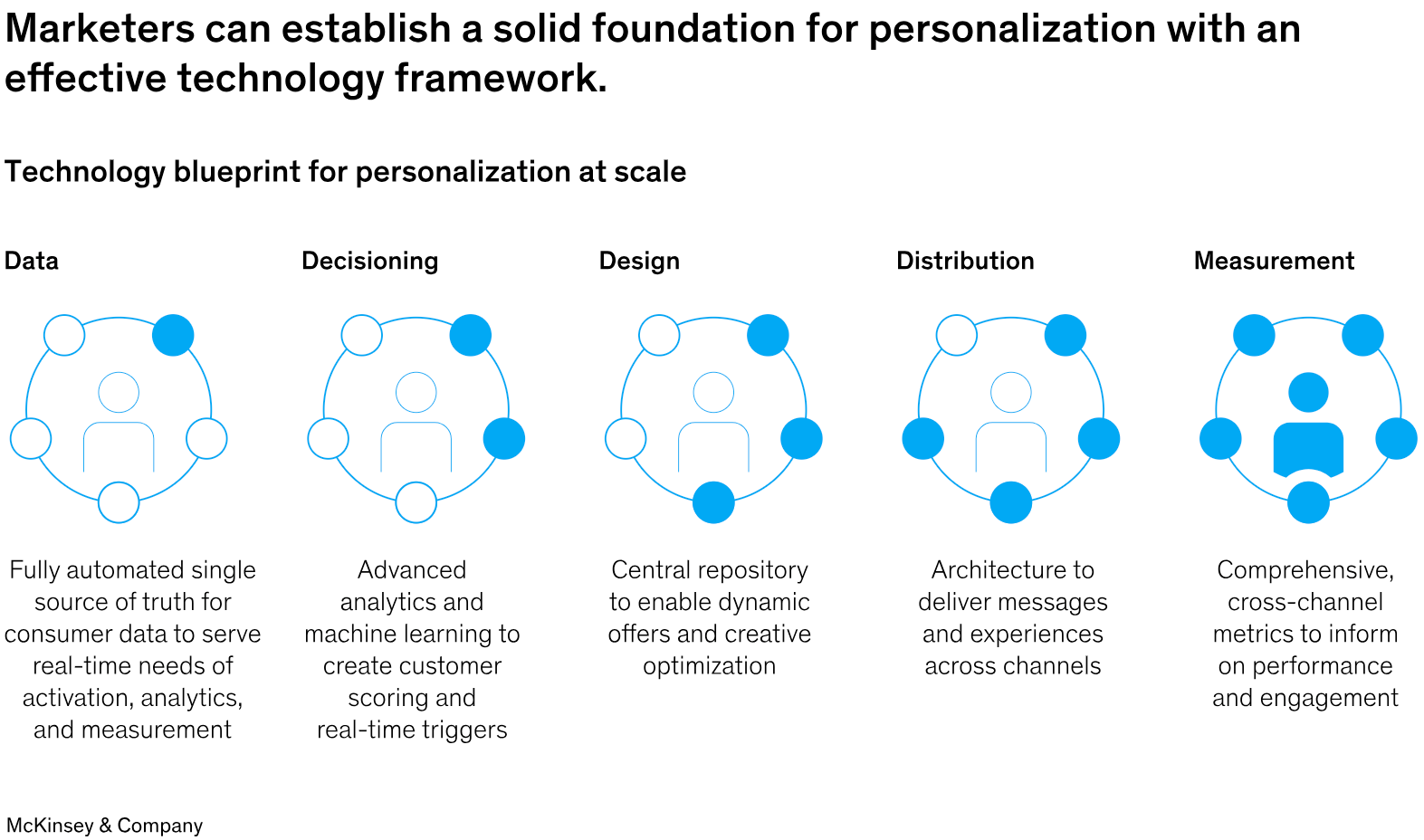
Source: McKinsey — A personalized AI marketing program requires an effective framework like this one.
Why Most Generative AI Marketing Programs Don't Survive Contact with Reality
Enterprise AI marketing can fail in avoidable ways. Organizations invest in sophisticated models but feed them fragmented data. They build segmentation logic that refreshes quarterly instead of continuously. They deploy personalization engines against monolithic content systems that can't assemble individualized messages at scale. And they measure success in impressions rather than revenue impact, which means problems go undetected until the program is too far gone to rescue.
Think of it as four gates. Miss any one, and the program eventually stalls, regardless of how much was spent getting there.
- Data Unification: one clean, canonical customer identity across every system in the stack.
- Audience Intelligence: real-time behavioral segmentation that refreshes continuously.
- Content Infrastructure: modular assets built to be assembled dynamically.
- Orchestration and Measurement: cross-channel delivery tied to closed-loop reporting, built before launch.
The three case studies below each demonstrate what clearing these gates looks like in practice.
How Starbucks Built Its AI Engine from the Data Layer Up
Starbucks had a loyalty program that was the envy of the industry. By 2023, the company counted 34 million Rewards members in the U.S. alone, each generating behavioral data across orders, locations, payment patterns, and app activity. The challenge was that the data came from an expanding ecosystem of systems: the mobile app, POS terminals, drive-thru screens, and IoT-connected espresso machines. It needed to be unified into a single, coherent customer record before any personalization engine could use it reliably.
"We talk a lot about our personalization capabilities at Starbucks, but truly that job is never done because as new technologies and capabilities come online, we are grabbing those and integrating them into our system."
— Brady Brewer, Starbucks CEO
Deep Brew, Starbucks' proprietary AI platform built on Microsoft Azure, was designed to solve the foundational data unification problem. According to Starbucks' data and analytics leadership, the platform uses an enterprise data analytics platform (EDAP) and data lake to ingest and unify signals from across this ecosystem: purchase history, time of day, weather, store location, and app behavior. This all took place on Starbucks' own infrastructure, with no third-party data exposure, and every touchpoint contributed to a single authoritative record.
With that stable foundation in place, real-time audience intelligence and cross-channel orchestration followed. Deep Brew's engine generates recommendations across the loyalty app, in-store POS systems, and drive-thru menu boards simultaneously. The system continuously determines what to surface for which customer and in which channel, adjusting as new behavioral data comes in.
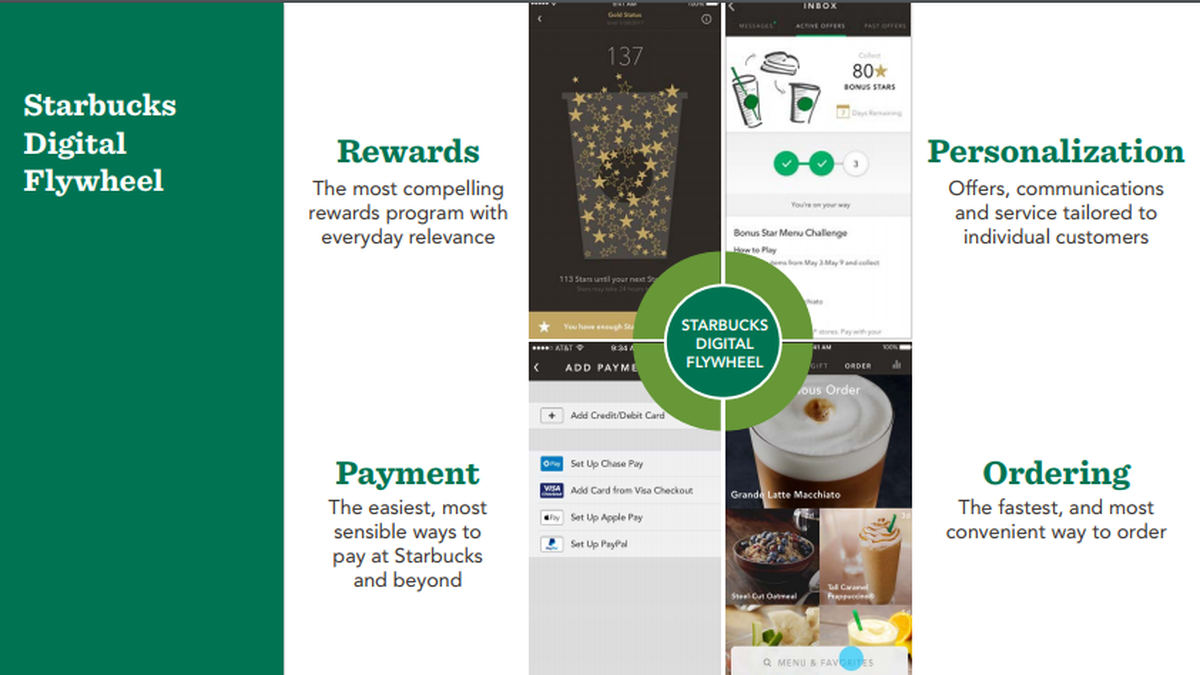
The program's results reflect the discipline of getting the sequence right. Rewards members (34.3 million active in the U.S. as of Q1 2024) now account for nearly 60% of sales at company-operated U.S. stores. Mobile orders account for more than 30% of U.S. transactions. These are structural outcomes, the product of building the data layer first and letting everything else grow from it.
How Verizon Turned 1,500 Data Points Per Subscriber into a Retention Machine
Verizon handles 170 million customer interactions annually. For most of its history, each one started cold. An agent picked up without knowing whether the person calling was about to churn, upgrade, or ask a billing question for the third time that month.
The company's AI personalization stack addresses the problem of audience intelligence directly. It draws on 1,500 data points per subscriber, includingusage patterns, service history, plan activity, and behavioral signals. Then, the system predicts call intent with 80% accuracy before an agent says a word. That same intelligence feeds MyPlan, which surfaces dynamically personalized offers based on each customer's actual behavior rather than their demographic segment. The audience intelligence layer runs continuously.
"I have 60,000 call agents, and I know what they are really good at, so I can match your call with the right agent."
— Hans Vestberg, Former Verizon CEO
Orchestration extends to physical channels as well, with measurement tied to every touchpoint. In-store AI pulls a customer's full profile the moment they arrive, reducing the average visit time by approximately 7 minutes. It’s a routing capability that feeds directly into closed-loop measurement. Wireless service revenue grew 3.1% year over year in Q4 2024, a figure Verizon executives tied in part to MyPlan personalization.
How L'Oréal Connected a Skin Scan Directly to a Sale
L'Oréal's personalization challenge was elemental for a beauty brand: customers couldn't try products before buying online. This led to high product returns and low conversion rates. The brand needed a way to deliver a confidence-building, individualized experience across more than 30 brands and dozens of markets simultaneously.
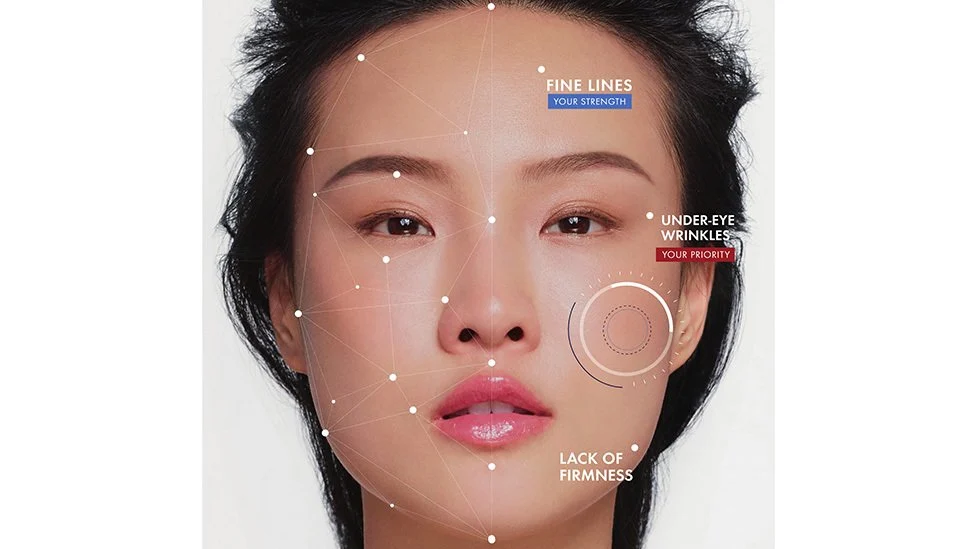
The solution tackled audience intelligence and content infrastructure in tandem, resulting in SkinConsult AI. Trained on 6,000 clinical images from L'Oréal's Skin Aging Atlases and validated across more than 4,500 smartphone selfies representing diverse skin tones, SkinConsult AI asks a few questions, analyzes a customer photo, and produces a personalized skincare routine in seconds. That diagnostic feeds directly into a modular content system that dynamically assembles a tailored product recommendation for each individual from standardized content components. There is no bespoke creative for each output.
The numbers validate the architecture. ModiFace (a L'Oréal partner) own site that reports the technology is used by nearly a billion consumers worldwide, deployed across L'Oréal's 37 international brands, and integrated into major retail platforms including Amazon and Instagram. L'Oréal has not published a specific conversion lift figure attributable solely to SkinConsult AI, but broader industry data is directionally consistent: research from the virtual try-on market finds that AI-personalized product pages improve conversion rates by 30–40% compared to standard product displays.
4 Questions Before Your Next AI Marketing Review
Sequencing is what makes customer data usable, audience intelligence current, content personalizable at scale, and results measurable from day one. The same logic runs through every case study in this piece. Before your next AI marketing review, ask these four questions.
1. Do your systems agree on who a customer is? If your CRM, ecommerce platform, and loyalty database are each maintaining their own version of who your customer is, your AI has no coherent subject to personalize for. For example, Starbucks built a single data lake pulling from the mobile app, POS terminals, drive-thru screens, and IoT-connected espresso machines into one authoritative record.
2. Check how often your customer segments actually refresh. Most enterprise marketing teams segment on a weekly, monthly, or quarterly cycle, and that's too slow. In the case study above, Verizon predicted call intent prior to connecting a customer with an agent, which only works because audience intelligence runs continuously, not on a schedule.
3. Can your content actually be assembled dynamically? L'Oréal's SkinConsult AI produces a personalized skincare routine by assembling recommendations from standardized modular components, the same building blocks recombined differently for every individual. Starbucks does the same across its loyalty app, POS screens, and drive-thru boards without rebuilding creative for each permutation.
4. Is your measurement system ready pre-launch? Precision requires instrumentation built into the program from the start, not retrofitted. Example: L'Oréal tracks try-on and diagnostic engagement across platforms because the consent-first data model it built enables attribution.
The Sequence Is the Strategy
Back to that consumer goods company anecdote. The program failed not because the AI was wrong, but because the team started at the end and worked backward. They built a personalization engine before they had a unified customer record. They deployed dynamic offers before their content was modular enough to assemble dynamically. They launched before they knew how to measure success.
Starbucks, Verizon, and L'Oréal each probably took longer to reach launch than their stakeholders wanted. But what they got in exchange was a program that actually worked when it went live, and continued working as it scaled.
A 2025 Gartner survey found that 65% of CMOs believe AI will dramatically transform their role within two years. The companies positioned to lead that transformation are those that built the foundation first.
The sequence is the strategy.
.avif)


.svg)


_0000_Layer-2.png)

